
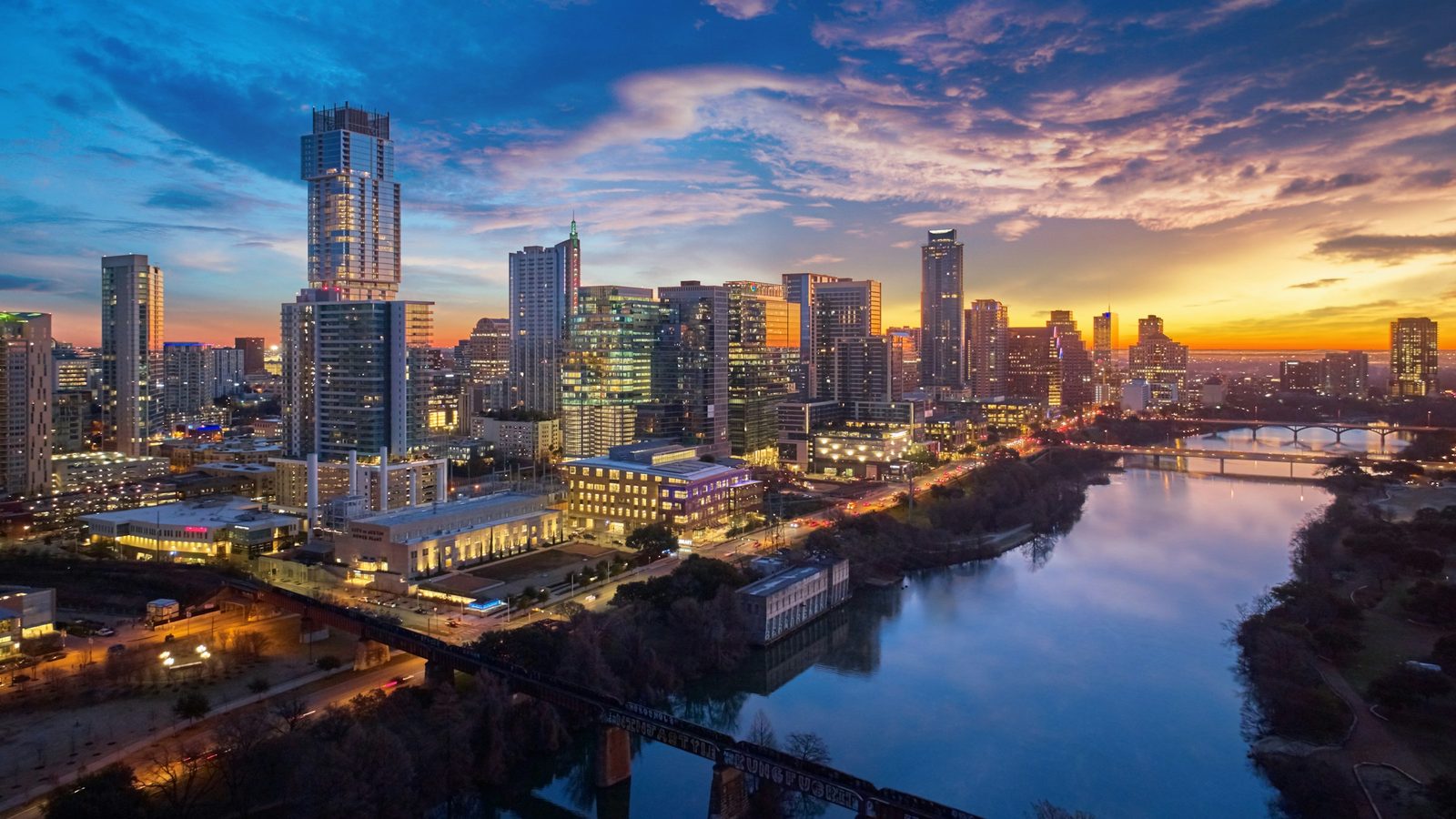
In 2010, Austin had about 30 nonstop destinations. Today it sits around 100, having more than tripled over the past decade. No US city has climbed the flight-connectivity rankings faster, with the possible exception of Nashville.
Tech relocations, conference volume, and population growth created the demand, and airlines responded. Tesla, Oracle, Meta, Indeed, Google, and dozens of smaller companies built or expanded Austin offices in the last decade. SXSW, F1, and a steady run of mid-tier conventions gave airlines confidence to keep adding routes. Southwest treats AUS as a focus city. American and Delta have both ramped up significantly.
For distributed teams, groups of friends planning a long weekend, and bachelorette groups, Austin keeps showing up in the overlap.
From regional airport to meeting city
The growth shows in the passenger numbers. AUS handled about 9 million passengers a year in 2010. By 2024 it was past 21 million. The terminal has been expanded twice and is in another major expansion now.
Routes followed passengers. Direct flights to West Coast tech hubs (Seattle, San Francisco, San Jose, Los Angeles) ran on multiple carriers per day. Transatlantic service appeared: Austin-London Heathrow on British Airways, Austin-Frankfurt seasonally on Lufthansa. JetBlue added Austin-Boston and Austin-New York routes that didn’t exist a few years prior. Frontier and Allegiant filled in the leisure routes.
The remaining gap is small-market coverage. Austin still doesn’t have nonstops to many tier-three cities that DFW or Atlanta serve. For groups with someone in a place like Tulsa or Shreveport or Birmingham, the math sometimes still favors a connection through Dallas. But for the typical distributed-team scenario (members in 4-6 major US metros), Austin almost always lands in the overlap.
Check Austin nonstops for your group.
What to do once you’re there
The things to do are varied without being spread thin. A group can build a long weekend around food, music, outdoors, or all three.
South Congress (SoCo) is the walkable shopping-and-restaurant strip that gives most first-time visitors their reference frame for the city. Boutiques, food trucks, the kind of mid-priced restaurants that handle group reservations well. Continental Club is the live music anchor on the south end.
East Austin is where the food scene migrated. La Barbecue, Suerte, Launderette, Justine’s: the restaurants run from barbecue to dim sum to French. East 6th Street is the bar density. Rainey Street downtown is bungalow bars on a converted residential block, so a group can wander between bars without leaving a four-block radius.
Downtown has the convention infrastructure and the bigger hotels. Mueller and the North Loop are the more local, less-polished alternatives if your group wants to base outside the tourist orbit.
The outdoor options are the other anchor. Lady Bird Lake has a 10-mile loop trail and kayak rentals. Barton Springs is a natural-spring-fed swimming pool that runs 68F year-round. Zilker Park is the central green space, with the kite hill view of the downtown skyline. The Greenbelt is an undeveloped creek-bottom hike that runs through the middle of the city.
Day trips are within reach. Texas Hill Country is 30-90 minutes west: wineries, swimming holes, small towns. Lockhart (barbecue) is 30 minutes south. Fredericksburg is the wine-and-Hill-Country destination two hours west.
A group flying from New York, Seattle, and Los Angeles lands in Austin cleanly:
See also: Minneapolis-Austin meeting points, or browse the full city-pair meeting points hub for every pair.
Budget and logistics
The flip side of Austin’s growth is the cost. Hotels downtown have risen to coastal levels: expect $220-340/night for a 4-star room in peak season, and $400 or more during SXSW or F1 weekend.
The workaround is to stay east of I-35 in East Austin or Mueller. Same rideshare distance to dinner, $140-200/night for comparable rooms.
Getting from the airport: AUS is 15-20 minutes from downtown by rideshare ($20-30 typical, $40-60 during major events). No rail to downtown yet (planned but not built). For groups, the short ride is an advantage over LAX or DFW.
Flight times from major cities:
| From | Flight time |
|---|---|
| New York (JFK) | 4 hours |
| Los Angeles (LAX) | 3 hours |
| Chicago (ORD) | 2.5 hours |
| Seattle (SEA) | 4 hours |
| Atlanta (ATL) | 2.5 hours |
Best seasons: October-November, March-April (avoiding mid-March SXSW). Summer is the trade-off: June through September regularly clears 100F, and the heat compresses what your group can do outside. Winter is mild (50s-60s F daytime), the lake and trails stay usable, and hotel rates drop.
Calendar to avoid: SXSW (mid-March), F1 weekend (mid-October), ACL Festival weekends (early October). Hotel rates 2-3x normal, restaurants jammed, ride share 3x surge. Either build a trip around one of these events deliberately, or schedule around them entirely.
Plan an Austin trip with Midway.
Who meets in Austin
Corporate offsites. Austin is a common pick for distributed team retreats, especially for tech-heavy companies. Venue density, the restaurant scene, outdoor activities, and a tech-heavy local economy suit them. Convention infrastructure is solid and growing.
Bachelor and bachelorette parties. Austin ranks in the top tier for bachelor parties and increasingly for bachelorettes. The party density on Rainey Street and East 6th, plus the daytime options (lake floats, brewery tours, ranch days), works for both. See our best bachelorette cities guide and bachelor party destinations; Austin ranks competitively on both for nonstop flight reach.
Friend trips. Music, food, outdoor activity, and bar density. A long weekend in Austin gets harder to plan if your group is large (10 or more becomes a reservation challenge) but works for groups of 4-8.
Family trips. Less obvious. Works better for adult-heavy family groups (siblings reuniting, in-laws getting to know each other) than for multigenerational families with kids. The outdoor activities and food scene carry weight; the absence of major family attractions like aquariums or theme parks shows.
Some of the newer routes are seasonal (Austin-Frankfurt runs only part of the year), so among the roughly 100 nonstops on offer today, check that the one your group needs operates in the month you travel. Midway’s month filter shows that; it does not show fares.