
By Midway’s route data, BNA connects to around 125 destinations nonstop from Nashville. A decade ago it had maybe 60 nonstop routes and a regional airport’s schedule, and the number is still climbing. No US city has moved up the flight connectivity rankings faster, with the possible exception of Austin.
Southwest expanded into Nashville, other carriers followed, and a surge in tourism and corporate relocations created the demand to sustain those routes. Nashville is now easier to reach from most of America than places twice its size.
That growth matters for anyone planning a group trip from different cities. Nashville went from a maybe to a usual shortlist entry in the span of a few years.
How Nashville got here
Southwest Airlines turned Nashville into one of its focus cities in the mid-2010s. The airline added routes quickly, connecting BNA to dozens of midsize markets that had no previous nonstop service. When Southwest fills a route with cheap fares, demand follows. And when demand follows, other airlines add competing flights.
American, Delta, United, and JetBlue all expanded Nashville service in turn. International routes appeared: London Heathrow on British Airways, seasonal Caribbean service from several carriers. BNA is now in a $4.5 billion terminal expansion to handle the growth.
The city’s population has grown more than 20% since 2010. Corporate relocations (AllianceBernstein, Amazon operations, Oracle) brought business travel demand. Bachelorette travel brought leisure demand. Together, they gave airlines confidence to keep adding routes.
Around 125 nonstop destinations puts Nashville in the top 20 nationally, close behind Detroit and Philadelphia.
See Nashville’s nonstop flight connections on Midway.
The city itself
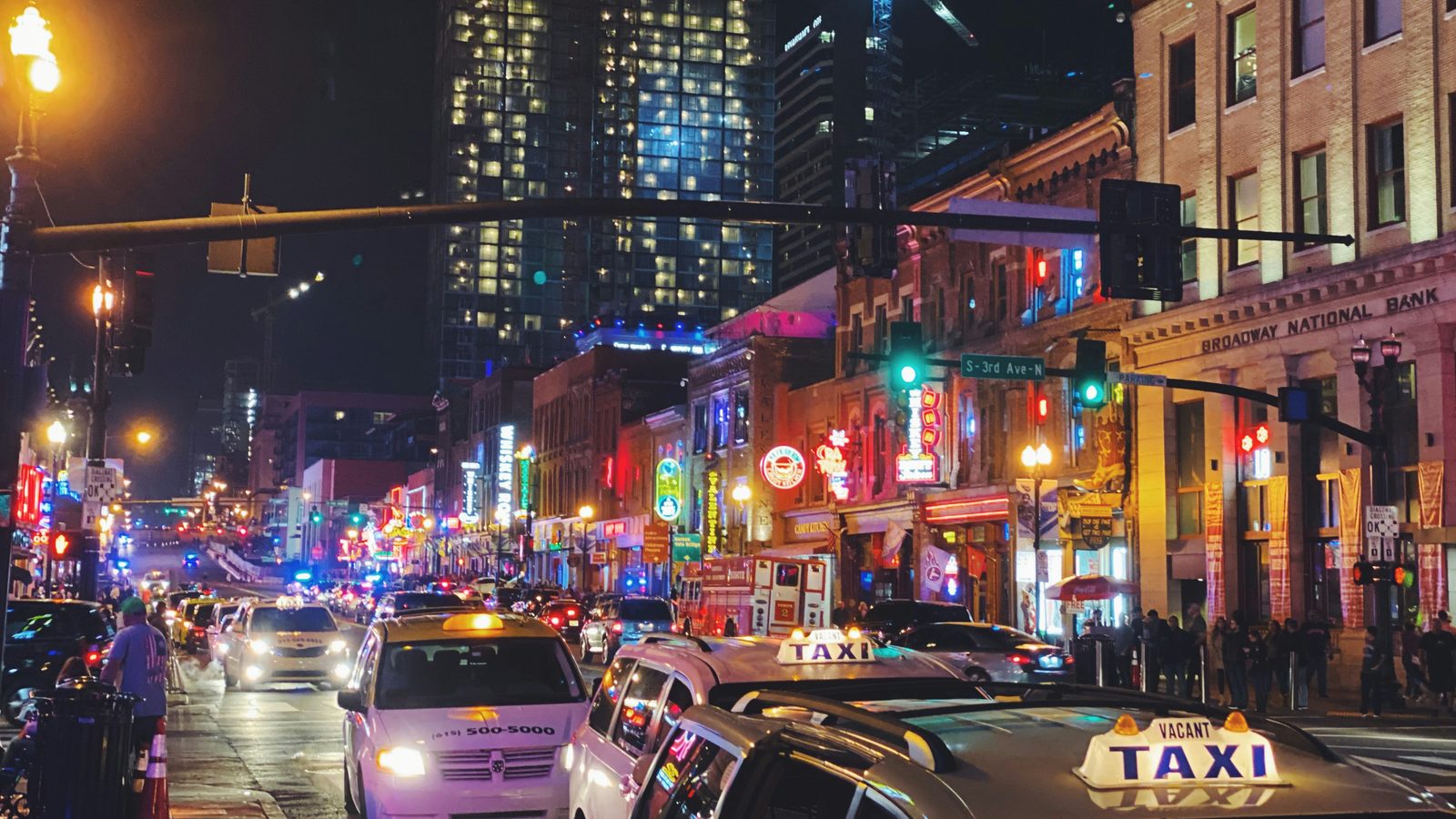
Broadway is the honky-tonk strip: neon, pedal taverns, bachelorette parties in matching shirts. It’s touristy and it works for one evening. A group that spends the rest of the trip in other neighborhoods gets the better version of Nashville.
The Gulch is the walkable, slightly polished neighborhood south of Broadway. Good restaurants, rooftop bars, and enough density that a group can wander without needing rideshares. This is where most offsite groups base themselves.
East Nashville is the local favorite. More independent restaurants, coffee shops, vinyl stores. Less polished, more interesting. The Five Points area anchors it.
12South is a short strip of boutiques and restaurants popular with the brunch crowd. Walkable, photogenic, slightly quieter.
Germantown, north of downtown, has some of Nashville’s better restaurants (Monell’s for communal Southern cooking, Rolf and Daughters for something more refined) and easy access to the stadium district.
Beyond the neighborhoods: the Ryman Auditorium (the original Grand Ole Opry venue) is a music venue first and a tourist stop second. Centennial Park has a full-scale Parthenon replica, strange and worth seeing. Pinewood Social combines bowling, a pool, and cocktails in a way that works well for group outings.
Hot chicken: Prince’s Hot Chicken Shack is the original. Hattie B’s is the popular one. Bolton’s is the one locals argue for. Try at least one.
Take a group flying from Portland, Boston, and Dallas. Nashville shows up as a common nonstop destination, which wouldn’t have been true a decade ago:
Nashville now appears in the overlap for groups that span the entire country. See also: Portland-Nashville meeting points, or browse the full city-pair meeting points hub for every pair.
Budget and logistics
Nashville’s costs have risen with its popularity, but it still undercuts most coastal cities.
Hotels in The Gulch or near Broadway run $150-250/night depending on the weekend. Major events (CMA Fest in June, NFL draft when it rotates back) spike prices significantly, so check the calendar before booking.
Airport to downtown: 15 minutes by car, with a straightforward highway connection. No rail option yet, but rideshare fares from BNA rarely exceed $20. The airport itself is compact and easy to navigate.
Walkability: Nashville’s core is walkable enough that a group staying in The Gulch, downtown, or Germantown can get through a long weekend without renting a car. East Nashville and 12South require short rides.
Flight times from major cities:
| From | Flight time |
|---|---|
| New York (JFK) | 2.5 hours |
| Los Angeles (LAX) | 4 hours |
| Chicago (ORD) | 2 hours |
| Miami (MIA) | 2.5 hours |
| Denver (DEN) | 3 hours |
Best seasons: April-May and September-October. Summer is hot and humid (90s F). Winter is mild but can be gray and rainy. Spring and fall hit the sweet spot of pleasant weather and manageable crowds.
Plan a Nashville trip with Midway. Enter your group’s cities and see the nonstop options.
Nashville by occasion
Bachelorette and bachelor parties. Nashville is the #1 bachelorette destination in the US, and the infrastructure reflects it. Broadway is built for groups: pedal taverns, party buses, rooftop bars. The logistics are simple. If your group is flying in from different cities, Nashville’s roughly 125 routes mean most people have a direct flight.
Corporate offsites. Nashville is a common offsite destination for distributed teams. Compact walkable core, good food, enough nightlife to keep people engaged after the working sessions end. The city is less distracting than Vegas or Miami, but more interesting than a suburban conference hotel.
Friend trips. Food tours, live music, brewery crawls, day trips to the surrounding countryside. Nashville rewards groups that like eating and drinking together, which is most groups.
Family trips. Nashville works for families, though it’s better suited to adult-heavy groups. The Parthenon, the zoo, and the Country Music Hall of Fame are the family-friendly anchors. For multigenerational reunions, Atlanta or Orlando might be more practical.
Two things the route count does not show. Some Nashville nonstops are seasonal (the Caribbean service runs part of the year), so check the month before booking. And event weekends such as CMA Fest move hotel rates more than they move fares, so check the calendar before fixing dates.